Friday, January 7, 2011

Best comics of 2010: No. 8 (tie) : Mr. Mendoza's Paintbrush

As I was reviewing this list, I realized that there were a few really important books I'd omitted.
Since these things are arbitrary anyway, I decided that a couple of these spots would be a tie.
So today's Best of 2010,  No. 8, Part One is Mr. Mendoza's Paintbrush!
Written by award-winning author and poet Luis Alberto Urrea, this slim graphic novel does not take full advantage of the form, but tells a story that is quiet, energetic and magical.
Mr. Mendoza is the senior citizen of the village. He is also its resident tag artist, and is respected as such by most of the locals. His tags are biting social satire on the locals, and he spares no one his  brush's venom.
The story is related to the readers by two young boys that are rapturously observing Mr. Mendoza's  efforts as they discover the possibilities of life.
Luis Urrea is the author of The Hummingbird's Daughter, Into the Beautiful North (the one I'm currently reading), and The Devil's Highway.
I first became aware of Sr. Urrea's work through my man Shawn Phillips. Here's Shawn's song based on the latter Urrea book.
This performance is from St. Cloud, MN, July 30, 2009.


Wow.
Shawn also played guitar on the audio book version of The Hummingbird's Daughter, which I have yet to add to my Shawn archive.
The deep color scratchboard art of Christopher Cardinale works fluidly with the text.
In the last few days, I've talked a bit about the possibilities of comics working as an adaptation medium.  I have more of a caution about people who are versed in other disciplines trying their hand at comics. Some of these, like the comics work of rock musician Dave Stevens or that of actor Nicholas Cage, are well-intentioned but mediocre in their execution.
In this case, Urrea has embraced the possibilities of the form, albeit a mite tentatively. There's an excessive reliance on large panels, but the text and the image support one another with minimal redundancy.
It's clear that Sr. Urrea has approached the form and the narrative respectfully.
The climactic event of the book involves Mr. Mendoza announcing at the local watering hole that he will be leaving the next day.

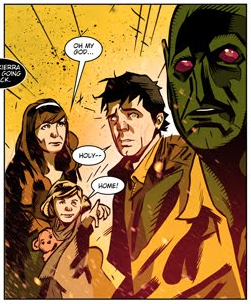
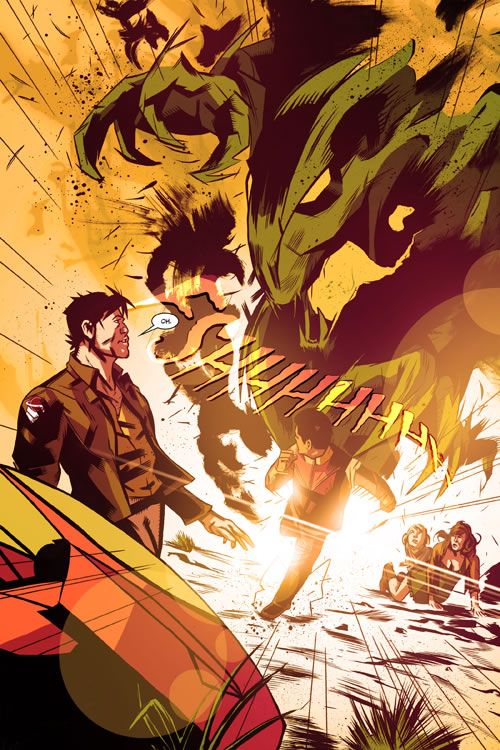
The flow of the page through the beam of light, the cascading purple swirls and the vaguely neotenic angels create an effective layout, one that's moving in every sense.
So does Mr. Mendoza die the next day?
I'm not saying, other than to say that it's his final great work of art.
In that sense, this is also a bit reflexive, in that it's art about art.
But at the risk of seeming facetious, isn't it all?
Urrea's observation that "home isn't just a place. It's also a language" is reinforced by the first page of this slim graphic narrative.

Tomorrow: best of 2010, No. 8, Part II.

Thursday, January 6, 2011

Best comics of 2010: No. 9: i, zombie

I don't much get zombies.
Dawn of the Dead was great social satire in its day (the Romero version, that is). Walking Dead has its moments, and I enjoyed the couple episodes of the AMC series I've seen to date. If I Am Legend is a zombie story and not a vampire story (I see it as a bit of both), that one has merit on many levels.
But most of the best zombie stories are about the people surviving them, not about the zombies themselves.
I mean really. How much personality can you have if you can be accurately described as brain dead?
And I like Mike Allred enough. Red Rocket 7 was fun, the Nexus/Madman crossover is a longtime favorite, his run on X-Statix was intoxicating goofiness, and I adored his work with Neil Gaiman on Metamorpho in Wednesday Comics.
But this book is something special.
With Chris Roberson writing, Allred is giving us a wild romp through monsterdom with a touch of of Generation Tech (or whatever the media term is for the current generation) wit.
A cadre of twenty-something monsters holding it together in the so-called "real world". Among them, a ghost, a zombie (an annoyed young woman who works as a gravedigger), and a were-terrier.
The zombie abosrbs the sentience of the deceased after her feast. This makes her privy to the thoughts of a killer.
The killer, in turn, informs her of the way monsters work. In a fascinating issue about how ancient Egyptian religious concepts of the fractured soul result in different types of monsters, creatures and supernatural beings, a larger narrative is begun.
In the larger narrative, this gives our zombie heroine, Gwen, cause to rethink her actions.

But hey, right after that, it's the origin of Scott (Scottie?), the were-terrier!
Also on board are Dixie, the waitress at their all-night coffee hangout, Nemia the vampire, a blond ghost whose name I can't find at the moment, and a couple rather cyncial and capable monster hunters.

Tomorrow: paint, tag and old men, as we hit Part I of Best of 2010, No. 8

Wednesday, January 5, 2011

Best comics of 2010: No. 10: Fevre Dream

Avatar Press has done some impressive, but frustrating, books.
Fevre Dream is no exception.
Based on the George R.R. Martin novel from 1982, this riverboat vampire tale can be seen as a thematic successor of sorts to the Anne Rice stuff from 1976. Beautiful vampires,  a set of vampiric laws revealed to a hapless soul drawn into their sphere (in Martin's case, a steamboat captain; in Rice's, a reporter), and a power play between said vampires. The core elements are certainly comparable.
But that's as far as it goes.
Martin's characters, especially the Captain, are more, dare I say, human, and lack the high-flown trappings of overblown prose that Rice inflicts on her characters, even in their early 90s Innovation comics versions.
Also, Martin writes to be read. Rice seems rather full of herself as a writer, at least to me.
This is a great story, made all the more so because of its twists and turns. It was long overdue for adaptation, with its kinetic and visceral aspects.
Fascinating characters indeed.
Is the Captain concerned for the welfare of his crew, himself, humanity? Yes, but more of his concern lies with his ship.
Are his vampiric co-owners and passengers a threat? Yes, but no so much that they cannot candidly speak of their necessary business, and they may be a greater threat to one another than to humanity.
Rafa Lopez's art alternates between chunky and sleek, with heavy elements of caricature (and lots of rather large hair for 1857!). I wasn't mad for his work on Lady Death, but then I wasn't a big fan of the book in general. The writing integrates smoothly with the images: a classic blend of show, tell, show and tell, and all the permutations thereon. Daniel Abaraham's "sequential adaptation" is consistent with the source material.
As alluded to earlier, the publisher, Avatar Press, is a mixed bag. They produce books of consistent quality (though I was quite disappointed in Alan Moore's Neuronomicon). They publish some fine Warren Ellis works- I really liked last year's Ignition City, for example, and this year's Captain Swing was wild steampunk fun. Some of their stuff, like Miller's Robocop books and the George Romero stuff, does nothing for me, but I recognize their quality even if they're not to my taste.
Every issue of Fevre Dream is offered with multiple covers, as are most Avatar books.
Multiple covers? Really? How 90s pre-bankruptcy Marvel of you.
I think the wraparounds are just fine, and see no need for other covers. Why go to the extra expense of printing multiple covers?
Avatar has a fairly chunky ad section, all house ads, all conveniently put in back of the book. Damned decent of them.
However, the ads are mainly a back issue shop, and offer back issue prices on books not yet available, as well as multiple "special" editions of their books.
This is a mite confusing, and I can't believe this practice helps their orders any. Dynamite used a similar strategy on a slightly smaller scale with its Lone Ranger line, which ends this month, I'm sad to say.
Fevre Dream is not Martin's first foray into comics. His Hedge Knight series has been servicably adapted by Marvel, and his Wild Cards anthology was adapted as part of Marvel's Epic line more than a decade ago- fitting, as it's a "real world" superhero anthology. There was a Dynamite revival of the title recently, but I can't speak to its quality, having passed it by at the time.
Here's a bit of the Marvel/Epic stuff.

Comics have long been accepted by those "in the know" as a viable vehicle for adaptation, in some cases more so than film, or at least on a par with it, as evidenced by Jon Muth's version of Fritz Lang's M.
I hope they do a decent trade of this series. If not, I'd happily have my issues bound.
Tomorrow: No. 9 of 2010, as we go from drinking blood to....

Tuesday, January 4, 2011

Best comics of 2010: No. 11: Johnny Recon No. 2

Wot, a local book making the year's best?
Yes, when it's this much fun.
 Johnny Recon No. 2 appeared in July 2010.

Mitch Gerads' art is both graceful and choppy, alternately invoking Krigstein, Nino and Al Williamson. Scott Dillon's writing is deeply steeped in pulp/space opera traditions, dancing on the edge of being an old chestnut, but avoiding that through innovative plot elements and sheer energy.
I mean really. Vampire grasses. How much fun is that?

Gerads and Dillon's Popgun Pulp Comics puts out a very professional product (but guys, you really need to update your webpage!). They've been tight and professional, and quite aggressive, in their marketing. As they are locals, I've seen their solicitation postcards promising oodles of delicious goodies at comic stores in the Twin Cities metro.
But it wasn't until recently that I became aware of their successful use of Kickstarter.
I really like Kickstarter. It adheres to a core philosophy I've tried hard to embrace in the last couple years: abundance. If your work is good enough, the support for it is out there. If the work is lacking, make it better. Kickstarter is the ultimate put up or shut up model, and is successful more times than not. It's a fascinating hybrid of capitalism, socialism and craftsmanship.
Here's the Popgun Pulp video used in their successful Kickstarter funding for this issue.


With local marketing blitzes, successful Kickstarter funding,and POD through KABLAM, these guys are the epitome of the future of comics publishing.
It's about recognizing that no one approach will do the job any more. In order to achieve whatever measure of success remains possible in comics, one must employ multiple strategies.
Even then, it's a crapshoot.
Your odds are helped if you tell your story well.
Vampire grasses. Marshans. A heroine sidekick who kicks some serious alien bad guy butt.
Way to go, guys.

Tomorrow: more vampires, but not of the flora variety, as we enter the Top 10 of 2010!

Monday, January 3, 2011

Best comics of 2010: No. 12: Meta4

Ted McKeever is an odd duck.
He;s been at it close to 30 years, on and off.
His comics appear sporadically and appear at first blush to be abstract sketches, tone poems that function more as ciphers than narratives.
Then you finish reading an issue and realize the scope of his accomplishment. He's sucked you into an impossible emotional whirlwind of story. How does he do that?
His works Metropol, Transit and Industrial Gothic defined and redefined 90s Dadaist angst. His Superman's Metropolis, putting Kal-el in the word of Fritz Lang's classic SF film, remains one of the best of the Elseworlds books to date.


His anti-technology bent and oddly empathetic nihilistic tone bring to mind the mutant offspring of David Lynch and recent Zemeckis films. 
2010 was a bit of a renaissance for this curious creator. In addition to a continuation of Shadowline's Definitive McKeever Library, we saw his new mini-series Meta4.
I want to applaud Image for taking a chance on this. In a year in which floppy sales were down by an average of 30%, to push such challenging material is brave indeed. Image has taken many more chances this year (more on at least one of them in future posts in this series), and this has led me to re-evaluate them as a publisher.
As for the book itself, the only reason I've ranked it so low in my top books of the year is that my budget didn't allow me to pick up the last 2 books in the 5 book series.
The story of an amnesiac astronaut, a mute giant woman, and a cadre of other damaged characters, this is challenging stuff.
Communication through icon and reflection. Sparse, lonely, and absurd. And yet I couldn't help my fascination with this story.
Here we are, wrapped in suits of skin, able to see distorted images of one another, but unable to really touch. How tragic, how absurd, how human.
We soon discover that what we took for an alien landscape trapping our astronaut is in reality a decayed Coney Island. He has no idea how he got there. A Coney Island of the Mind, if you please, thank you, Mr. Ferlinghetti.
NO less a creative voice than John Mueller, creator of the two profound, brutal and beautiful 90s series, OINK, has also sung the praises of this work.
Tomorrow: No. 12, and a rocket ship!

Sunday, January 2, 2011

Best comics of 2010: No. 13: DV8: Gods and Monsters

Next up on our hit parade is Brian Wood's miniseries of his creation DV8.
A teen superhero team like GEN 13, DV8's distinguishing factor is that they are inherently selfish.
I enjoyed Wood's writing on the Oni Press series LOCAL (with art by former classmate Ryan Kelly) a great deal, and thought to give this a chance based solely on that.

What intrigued me about the DV8 miniseries was not the selfish aspect of the characters (I mean really- selfish teenagers- how cliche' is that?) but the circumstances of the story.


The characters are stranded amid two pre-technological cultures, and are choosing up sides in the wars of those cultures, and debating whether they should have any involvement whatever.
Action, philosophy and snark of the best kind.
While the sniping between characters got a mite tedious around issue three, overall this posed some interesting possibilities- sort of a Rising Stars meets Lord of the Flies scenario. Questions of how powerful people still coming to terms with themselves respond to the potential influence they can have on society, or societies, are challenging.
But this is not some philosophical diatribe, no, my friends. This is war, aided and abetted by very powerful and not-quite mature beings.
Serious superhero slugfest, teen angst, and some very aggressive locals.

Cool.
Tomorrow: Number 12.

Original Art Sundays #74 : Midnight Lightning

As promised, something a bit different this week.
As I may have mentioned here before, ever since my Mother passed, I create a book of her paintings for my siblings as part of a communal Christmas present.
Mother gave us all the same thing every Christmas, and it was always this odd melange of stuff. For example, one year we got a book on Biblical mathematics, a pound of Basmati rice, a kitchen fire extinguisher and a roll of silver dollars, all in a stainless steel stock pot.
When she died, we agreed to keep doing it between ourselves, for each other and in her memory.
My contribution has been the books of her paintings, most of which were left in my care.
This year, it was a book of her portraits. Last year, some of her abstract and surrealist imagery.
Since she did a Hendrix paining for a family friend, inspired by the cover of Midnight Lightning, and she shared a birthday with Jimi on Nov. 27, I decided to do a recording of Hendrix's Little Wing and create a short video of her work.


So in hope for the new year and in memory of Esther Bender, enjoy.

Friday, December 31, 2010

Best comics of 2010: No. 14: Ex Machina No. 50

With just an hour an a half left to 2010, I think I'm on safe ground beginning my best of the year posts now.
I know many of my readers may be out reveling, but I never got into New Year's that way very much. So more power to you. Party on. I'll write. Nice glass of wine, relaxed cats, a fire, and writing about comics. That's a good celebration!
I'll do two weeks' worth of bests. No less arbitrary a number than ten, and there was some good stuff this year.
First up, the final issue of Brian K. Vaughan's Ex Machina.

The writing remained taut to the end, and the art maintained its effective combination of photo-realism and ornate decorative elements.
But I was let down by the ending.
When you have a superhero who's a politician, both roles carry expectations on the part of the constituents. I had a preconceived notion of who Mitchell Hundred was, and the character presented in the denouement did not reflect that preconception, quite specifically, did not reflect MY preconception. I don't know if that's a failing in the writing or in the reading, but it did leave me rather nonplussed. I saw him as a pragmatic idealist, and the latter sort of- eroded.
I'd like to be more specific about the big thing that left me with this sense, but I don't want to give too much away. It's still a book well worth reading, and we're about to enter spoiler territory anyway.
You've been warned. Spoilers in your immediate future.
Here we go....
As Mitchell Hundred ascends the political ladder, the two people closest to him are consumed by that ascension.
First, his friend Bradbury resurfaces. After declaring his love for Mitch, he wanders into oblivion.
Now, this plays into the subplot about Hundred's sexuality, which was never resolved directly in the storyline, though we were given ample plot points indicating he was gay. That makes his shocked response to Bradbury's declaration tough to cipher. Is he jarred by the prospect of loving a friend, or is he really not gay? In either case, his less than noble response to Bradbury says it all- he'll sacrifice the friendship for ambition if he must.
Then Mitchell encounters his friend, mentor and oftimes adversary, Kremlin, who had a very different vision of how Hundred should best use his miraculous curse of conversing with machines.

I can't decide if this is as simple as power corrupts, or if this is the inevitable path of political ambition, or simply the culmination of these two people being who they are in relation to one another. In any event, it has a moral ambiguity that left me feeling, well, disappointed.
Now understand. I'm not one of those people who has to have chipper stories all the time. Far from it. But I was left with a sense of uncertainty. A book that offered shining possibility turns out to be a tragedy.
Hundred becomes UN Ambassador and declares that the fallen tower (only one fell due to his intervention- how's that for heroism?) will be rebuilt exactly as it was.
We are privy to this intimate moment of remorse.
Brings to mind the moment in Unbreakable when Elijah says "real life doesn't fit into little boxes that are drawn for it."


His political path takes him in other directions as well.
Again, I won't reveal the ultimate spoiler, though others have done so online. Suffice to say that the issue's title, VICE, has more than one meaning.
I still recommend the whole series wholeheartedly. But I feel about Mitch Hundred much like I felt about the main character in Samuel Delaney's TRITON: after going through all that, I so wanted them to have happy endings.
Jan. 2: Best Comic of 2010, no. 13.

Thursday, December 30, 2010

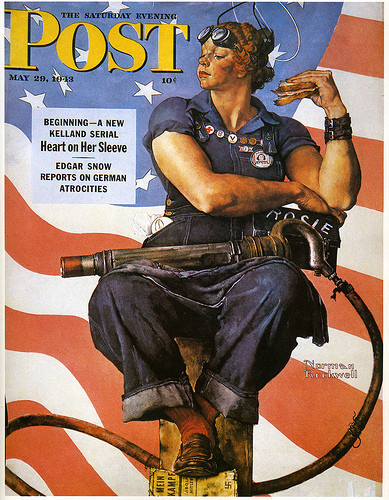
Rosie the Riveter: the comics connections

Geraldine Hoff Doyle, the woman who modeled for the famed Rosie the Riveter poster (unbeknown to her!) has passed at the age of 86.
Rosie was an icon for more than WWII, which was important enough in its own right. The classic Rosie poster became a symbol for the feminist movement of the late 60s- mid 80s, and retains its power to inspire to this day.
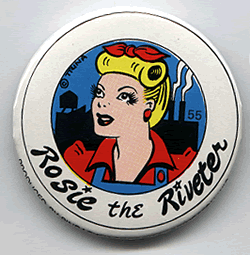
Rosie surfaced in comics several times. The most noteworthy is Trina Robbins' Rosie strips.
Here's a button Trina did for Kitchen Sink!
The strips appeared in Wimmen's Comics no. 4 and Snarf No. 7, and if memory serves, an issue of Arcade as well.
Illustrator Joel Priddy offers this version of Ma Hunkel, the original Red Tornado, as an aspiring Rosie figure:


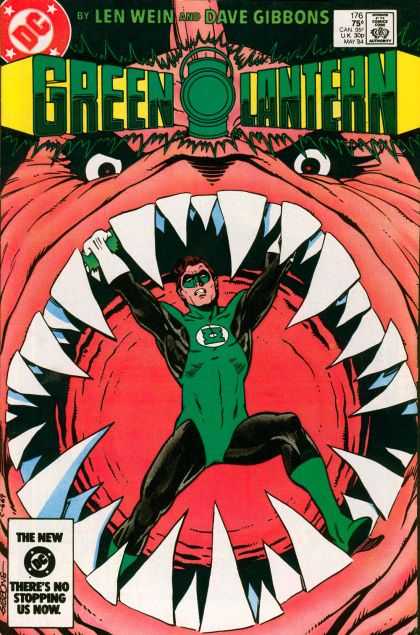
There was a villain named Rosie the Riveter in this issue of Green Lantern, but the connection is in name only.
About a year ago, our friends at Tee Fury put out a limited edition Rosie pastiche using Princess Leia.

The image has been adapted more times than can be counted, in all probability. Here's a Tristian Eaton poster for Obama's election campaign, using Rosie imagery and some pretty standard comic book devices.

Amendment to original post! Here's Marge Simpson as Rosie, from the cover of the Dec. 2010 issue of Utne Reader!

Finally, here's Norman Rockwell's version of Rosie...


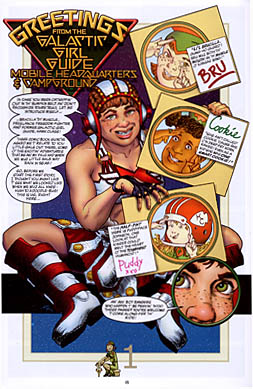
...and Brucilla the Muscle from Kaluta's wonderful Starstruck comic.


It's tempting to attribute all images of strong women post-WWII to Rosie. But what's more significant than direct attribution is the way the spirit of the image informs women: strength, confidence and beauty. None of these need be sacrificed. A woman can be all those things.
Now that's a positive message, one that comics can reinforce.
Go Rosie! You did well!


Tuesday, December 28, 2010

Original Art Sundays (Tuesday)#73 : Tranny Towers p. 12

A tad late, but only due to the holiday!
This strip was timed for Pride, as surgery is celebrated in trans communities (or used to be, at least). It was presented as a double wide strip, taking a full half a page in a 9" x 12" magazine.
Again, some playful graphic elements, notably the title composed of scalpels and the swirling memories in the free association panel that leads into the main action.
In retrospect, this is rather sparse for an operating theater, and she is not exactly, ahem, in position for this particular operation. Also, that cart is in isometric perspective, not linear.
Ah well.
Bear in mind as you read these that they were, aside from this one, printed at about 3" w x 4 1/2"h.
These have not been reprinted in 15 years.
The reversed out text at the end of the bottom banner has been digitally re-lettered, as was the "machine that goes ping" on the side of the, well, machine that goes ping.
Next week: something a bit different.

Wednesday, December 22, 2010

Thoughts on 2010 as it fades away....

As I prepare wildly for Christmas (one of my favorite times, but so hectic!), I'm given to reflect on the last year.
You know, the one that's wrapping up now.
Dickens had a gift for understatement. Times glorious and tragic.
My career was full of opportunities this year. Many of them, such as presenting at both national and regional PCA conferences, were satisfying and promising. However, I had the lowest level of paying work in 2010 that I've had for more than a decade. I won't bore you with the ensuing economic woes. Suffice to say it's been a snug year, at best.
I have three writing jobs to finish by mid-January. All will be published. One pays.
Mind, this is in large part the academic's lot in life. And though I came to this career late in life, I am loath to part with it, despite its continual setbacks. As the Genesis song says, these are the hands we're given. My Deity, I just quoted a post-Peter Gabriel Genesis song. Oh, the shame, the perfidy.
Ahem.
My hope for the scant remaining days of 2010, and for 2011, is that I will complete some or most of (perhaps all?) my projects, and that I find a creative outlet that provides me with much-needed revenue.
I suspect that, for many of us, Alfred Bester's observation will hold true. The future will be like the present, only more so.
Politicians will bring hope and disappointment. We humans will continue to mistrust one another, and on blessed occasion we will put our skepticism and fear aside and allow ourselves to treat each other decently, giving us hope that we can do so again.
And a few more people will decide that art is worth something.
In reading over my class evaluations for this semester, I was struck by the following comment:
"I learned way too much."
What a fascinating variation on Woody Allen's observation that life is full of pain, suffering and misery, and it's all over much too soon.
Sadnesses: a premature end to a promising relationship, career and fiscal setbacks, and the losses of Charlie Beasley and Harvey Pekar.
Joys: Rediscovering old comics artists, rediscovering my older comic art and finding it to be much better than I recall, and seeing the Greenwood Encyclopedia in print with me as an editorial board member.

And I live in the hope that next year is exactly like this one, only more so.
Some rather charming thoughts and images about the possibilities of life from two of my favorite creators:


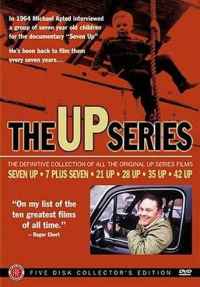
Another goal for 2011: re-view all of the Seven- Up films!

Sunday, December 19, 2010

Original Art Sundays #72 : Tranny Towers p. 11

On time for a change this week. How'd that happen?
In cleaning up a huge pile of work, I found a few dozen comic pages I'd forgotten I'd done! I will post these on an as-needs basis.
The stack included the Tranny Towers strips from book II.
We're about halfway through Book I now. But I'm so glad I found the originals of these. I have ONE copy left of the comic-size mockup I did in preparation for the Xeric grant lo, these many years ago, and I've been pulling scans from that. Problematic, as the book is on 20# Xerox paper and there's a LOT of bleed through to compensate for, which can be a challenge if the art has fine lines that can drop out when pushing the white point. This has been an issue in many of these pages.
Anyway, here's the next page.
Again, some fun layout play and some on-the-nose wordplay.
I was so enthusiastic when this work went to press for the first time. I timed the work so Dena's surgery would hit at Pride, in the following strip.
I'm toying with the idea of doing a collection of these on a POD site, possibly LULU.
The collection would have to include some editorial comment and the editorial strips I did for TransSisters (note: link to an article on another contributor) and TNT News magazines, one of which was not printed because the editor felt it "too depressing". In truth, the strip was about tragedy balanced with optimism, but hey, she was the editor.
At any rate, my vision for this book is becoming more coherent, even if its content is in part dated.
Next week: I don't know yet!

Saturday, December 18, 2010

Original Art Sundays #71 (late) : Gentle Giant Calendar 2011

A half inch away from being caught up....
In 1999, the year I completed my BFA, the online discussion list for fans of Gentle Giant had their first annual gathering, the Global On-Reflection Giant Gathering, or GORGG.
I was staying with my friend Tatsurou Ueda and his delightful wife Yoko.
Tradition dictates that when one is a guest in a Japanese household, one brings a gift. So I designed a calendar based on the band.
It proved so popular with his friends that I produced them for other list members as well.
It's been a cottage industry- I do the research, typesetting, printing, order taking and mailing. The 2011 calendar is my twelfth.
However, this year, rather than do the hands- on work, since my resources are quite low, I've elected to let Lulu handle the printing and shipping. I have some misgivings about this- Id rather do it myself- by hey, no printing budget means just that.
So the 2011 Gentle Giant Calendar is available to the general public (something else I've never done before) at Lulu.com.
I don't expect my readers here to buy these (but if you want to, I won't complain!). As is my way, I'm just putting my work out there.
Profits, if any, will go into the GORGG fund, to cover expenses for putting the event on and bringing our guests, the band members who have joined us and become dear friends over the years.
I give comp copies to members of the band and contributors. They'll get 'em late this year, but they will get them!
Here's this year's cover art.
And a sample month page, featuring some preparatory art for the very first GG calendar.

As you can see, the love of the band is what it's all about.