As I prepare wildly for Christmas (one of my favorite times, but so hectic!), I'm given to reflect on the last year.
You know, the one that's wrapping up now.
Dickens had a gift for understatement. Times glorious and tragic.
My career was full of opportunities this year. Many of them, such as presenting at both national and regional PCA conferences, were satisfying and promising. However, I had the lowest level of paying work in 2010 that I've had for more than a decade. I won't bore you with the ensuing economic woes. Suffice to say it's been a snug year, at best.
I have three writing jobs to finish by mid-January. All will be published. One pays.
Mind, this is in large part the academic's lot in life. And though I came to this career late in life, I am loath to part with it, despite its continual setbacks. As the Genesis song says, these are the hands we're given. My Deity, I just quoted a post-Peter Gabriel Genesis song. Oh, the shame, the perfidy.
Ahem.
My hope for the scant remaining days of 2010, and for 2011, is that I will complete some or most of (perhaps all?) my projects, and that I find a creative outlet that provides me with much-needed revenue.
I suspect that, for many of us, Alfred Bester's observation will hold true. The future will be like the present, only more so.
Politicians will bring hope and disappointment. We humans will continue to mistrust one another, and on blessed occasion we will put our skepticism and fear aside and allow ourselves to treat each other decently, giving us hope that we can do so again.
And a few more people will decide that art is worth something.
In reading over my class evaluations for this semester, I was struck by the following comment:
"I learned way too much."
What a fascinating variation on Woody Allen's observation that life is full of pain, suffering and misery, and it's all over much too soon.
Sadnesses: a premature end to a promising relationship, career and fiscal setbacks, and the losses of Charlie Beasley and Harvey Pekar.
Joys: Rediscovering old comics artists, rediscovering my older comic art and finding it to be much better than I recall, and seeing the Greenwood Encyclopedia in print with me as an editorial board member.
And I live in the hope that next year is exactly like this one, only more so.
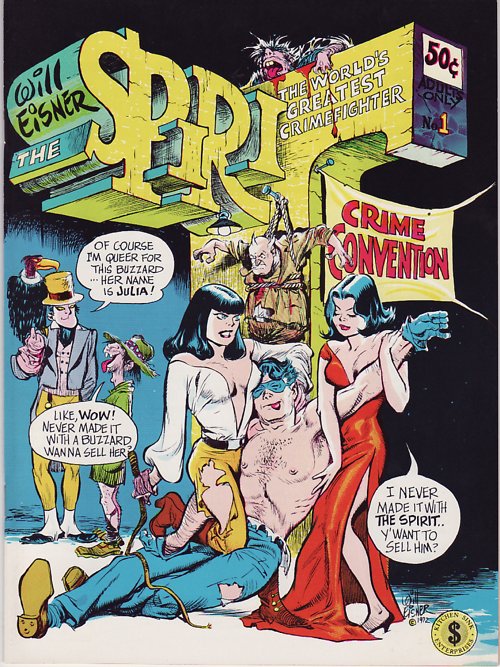
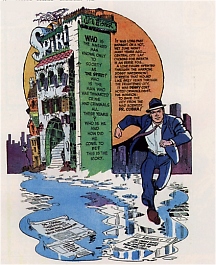
Some rather charming thoughts and images about the possibilities of life from two of my favorite creators:
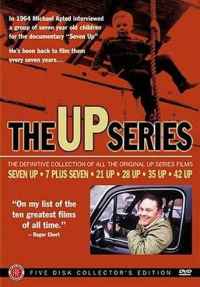
Another goal for 2011: re-view all of the Seven- Up films!
Insights about comics, prog rock, classic cartoons and films, higher education, sexuality and gender, writing, teaching, whatever else comes to mind, and comics. I know I said comics twice. I like comics!
Wednesday, December 22, 2010
Sunday, December 19, 2010
Original Art Sundays #72 : Tranny Towers p. 11
On time for a change this week. How'd that happen?
In cleaning up a huge pile of work, I found a few dozen comic pages I'd forgotten I'd done! I will post these on an as-needs basis.
The stack included the Tranny Towers strips from book II.
We're about halfway through Book I now. But I'm so glad I found the originals of these. I have ONE copy left of the comic-size mockup I did in preparation for the Xeric grant lo, these many years ago, and I've been pulling scans from that. Problematic, as the book is on 20# Xerox paper and there's a LOT of bleed through to compensate for, which can be a challenge if the art has fine lines that can drop out when pushing the white point. This has been an issue in many of these pages.
Anyway, here's the next page.
Again, some fun layout play and some on-the-nose wordplay.
I was so enthusiastic when this work went to press for the first time. I timed the work so Dena's surgery would hit at Pride, in the following strip.
I'm toying with the idea of doing a collection of these on a POD site, possibly LULU.
The collection would have to include some editorial comment and the editorial strips I did for TransSisters (note: link to an article on another contributor) and TNT News magazines, one of which was not printed because the editor felt it "too depressing". In truth, the strip was about tragedy balanced with optimism, but hey, she was the editor.
At any rate, my vision for this book is becoming more coherent, even if its content is in part dated.
Next week: I don't know yet!
In cleaning up a huge pile of work, I found a few dozen comic pages I'd forgotten I'd done! I will post these on an as-needs basis.
The stack included the Tranny Towers strips from book II.
We're about halfway through Book I now. But I'm so glad I found the originals of these. I have ONE copy left of the comic-size mockup I did in preparation for the Xeric grant lo, these many years ago, and I've been pulling scans from that. Problematic, as the book is on 20# Xerox paper and there's a LOT of bleed through to compensate for, which can be a challenge if the art has fine lines that can drop out when pushing the white point. This has been an issue in many of these pages.
Anyway, here's the next page.
Again, some fun layout play and some on-the-nose wordplay.
I was so enthusiastic when this work went to press for the first time. I timed the work so Dena's surgery would hit at Pride, in the following strip.
I'm toying with the idea of doing a collection of these on a POD site, possibly LULU.
The collection would have to include some editorial comment and the editorial strips I did for TransSisters (note: link to an article on another contributor) and TNT News magazines, one of which was not printed because the editor felt it "too depressing". In truth, the strip was about tragedy balanced with optimism, but hey, she was the editor.
At any rate, my vision for this book is becoming more coherent, even if its content is in part dated.
Next week: I don't know yet!
Saturday, December 18, 2010
Original Art Sundays #71 (late) : Gentle Giant Calendar 2011
A half inch away from being caught up....
In 1999, the year I completed my BFA, the online discussion list for fans of Gentle Giant had their first annual gathering, the Global On-Reflection Giant Gathering, or GORGG.
I was staying with my friend Tatsurou Ueda and his delightful wife Yoko.
Tradition dictates that when one is a guest in a Japanese household, one brings a gift. So I designed a calendar based on the band.
It proved so popular with his friends that I produced them for other list members as well.
It's been a cottage industry- I do the research, typesetting, printing, order taking and mailing. The 2011 calendar is my twelfth.
However, this year, rather than do the hands- on work, since my resources are quite low, I've elected to let Lulu handle the printing and shipping. I have some misgivings about this- Id rather do it myself- by hey, no printing budget means just that.
So the 2011 Gentle Giant Calendar is available to the general public (something else I've never done before) at Lulu.com.
I don't expect my readers here to buy these (but if you want to, I won't complain!). As is my way, I'm just putting my work out there.
Profits, if any, will go into the GORGG fund, to cover expenses for putting the event on and bringing our guests, the band members who have joined us and become dear friends over the years.
I give comp copies to members of the band and contributors. They'll get 'em late this year, but they will get them!
Here's this year's cover art.
And a sample month page, featuring some preparatory art for the very first GG calendar.
As you can see, the love of the band is what it's all about.
In 1999, the year I completed my BFA, the online discussion list for fans of Gentle Giant had their first annual gathering, the Global On-Reflection Giant Gathering, or GORGG.
I was staying with my friend Tatsurou Ueda and his delightful wife Yoko.
Tradition dictates that when one is a guest in a Japanese household, one brings a gift. So I designed a calendar based on the band.
It proved so popular with his friends that I produced them for other list members as well.
It's been a cottage industry- I do the research, typesetting, printing, order taking and mailing. The 2011 calendar is my twelfth.
However, this year, rather than do the hands- on work, since my resources are quite low, I've elected to let Lulu handle the printing and shipping. I have some misgivings about this- Id rather do it myself- by hey, no printing budget means just that.
So the 2011 Gentle Giant Calendar is available to the general public (something else I've never done before) at Lulu.com.
I don't expect my readers here to buy these (but if you want to, I won't complain!). As is my way, I'm just putting my work out there.
Profits, if any, will go into the GORGG fund, to cover expenses for putting the event on and bringing our guests, the band members who have joined us and become dear friends over the years.
I give comp copies to members of the band and contributors. They'll get 'em late this year, but they will get them!
Here's this year's cover art.
And a sample month page, featuring some preparatory art for the very first GG calendar.
As you can see, the love of the band is what it's all about.
Wednesday, December 15, 2010
Original Art Sundays #70 (late) : Tranny Towers p. 10
Still catching up, as is evidenced by the tardiness of this. But there are signs of land on the horizon. Grades are in and I've been taking this HUGE barrage of tests from temp agencies, in hope of getting some fill-in work between teaching assignments. The up side of that is that I will have at least one day a week to devote to my craft for a while. I have a monster batch of writing assignments with short deadlines, but not so much as to preclude my hitting the drawing board again.
I'm also working on a couple design and photo projects. And I have not forgotten A Private Myth, but I am evolving the narrative as I go. We're coming up on some action and flashback stuff in the story, which will break the whole soliloquy aspect of it.
Soliloquy can be tedious.
I had a fascinating discussion about the basics of storytelling a couple days ago. Fellow MCAD teacher and screenwriter Tom Pope offered some blunt but brilliant insights on what works and what doesn't in personal narratives, which A Private Myth is in part.
But as the work evolves, let me offer another Tranny Towers page.

This is actually better than I remember. One person's life gets better as another person's tanks. That, coupled with the delusions around surgery ("now my life will be perfect"- don't we all believe that about something, even when we know better?) make for a challenging dynamic.
This also touches on the issues around medical hierarchy re: trans health, and it does need to be acknowledged that many of these issues have since been addressed, though I doubt they'll ever be fully resolved.
Next: another page from amnesia lane!
I'm also working on a couple design and photo projects. And I have not forgotten A Private Myth, but I am evolving the narrative as I go. We're coming up on some action and flashback stuff in the story, which will break the whole soliloquy aspect of it.
Soliloquy can be tedious.
I had a fascinating discussion about the basics of storytelling a couple days ago. Fellow MCAD teacher and screenwriter Tom Pope offered some blunt but brilliant insights on what works and what doesn't in personal narratives, which A Private Myth is in part.
But as the work evolves, let me offer another Tranny Towers page.

This is actually better than I remember. One person's life gets better as another person's tanks. That, coupled with the delusions around surgery ("now my life will be perfect"- don't we all believe that about something, even when we know better?) make for a challenging dynamic.
This also touches on the issues around medical hierarchy re: trans health, and it does need to be acknowledged that many of these issues have since been addressed, though I doubt they'll ever be fully resolved.
Next: another page from amnesia lane!
Sunday, December 12, 2010
More paper dolls! (catch- up No. 1 of 3)
Now that grading is done and I can concentrate on getting a new fill-in gig and putting this year's design projects to bed, I can catch up on my blogging a tad.
First up, those new paper doll finds I promised last week!
The first is a jam paper doll series, the center spread from Wimmen's Comics No. 11.
Included in this delightful piece, clockwise from top left:
Bugs Herbert
Aline & Sophie Crumb
Trina
Dori Seda
Lee Binswager
Caryb (?)
Diane Noomin
This may be the first time I mentioned the late, great Dori Seda here. Her work has this compelling combination of raw raunchiness and innocent vulnerability.
Next up, another Trina Robbins paper doll, this one from Gay Comics No. 25.
This piece is noteworthy in a couple ways.
First, it's a sort of redemption for Trina. Her story "Sandy Comes Out", from Wimmen's No. 1, was one of the first, if not the first, comic story about lesbians, dated 1970. Mary Wings took exception to the story, and followed with her 1974 book Come Out Comix. It should be noted that Trina and Mary remain friends and that Trina's subsequent work in this arena has been very well recieved.
Second, Gay Comics No. 25 was the last issue, and featured most of the creators who had appeared in the title prior. To the best of my knowledge, it's the only time Trina and I had work in the same comic! I posted my Tranny Towers page from that issue some time back.
It's possible Gay Comics will return, but I've heard nothing of that possibility for almost two years now.
Tomorrow: Catch- up Post No. 2.
First up, those new paper doll finds I promised last week!
The first is a jam paper doll series, the center spread from Wimmen's Comics No. 11.
Included in this delightful piece, clockwise from top left:
Bugs Herbert
Aline & Sophie Crumb
Trina
Dori Seda
Lee Binswager
Caryb (?)
Diane Noomin
This may be the first time I mentioned the late, great Dori Seda here. Her work has this compelling combination of raw raunchiness and innocent vulnerability.
Next up, another Trina Robbins paper doll, this one from Gay Comics No. 25.
This piece is noteworthy in a couple ways.
First, it's a sort of redemption for Trina. Her story "Sandy Comes Out", from Wimmen's No. 1, was one of the first, if not the first, comic story about lesbians, dated 1970. Mary Wings took exception to the story, and followed with her 1974 book Come Out Comix. It should be noted that Trina and Mary remain friends and that Trina's subsequent work in this arena has been very well recieved.
Second, Gay Comics No. 25 was the last issue, and featured most of the creators who had appeared in the title prior. To the best of my knowledge, it's the only time Trina and I had work in the same comic! I posted my Tranny Towers page from that issue some time back.
It's possible Gay Comics will return, but I've heard nothing of that possibility for almost two years now.
Tomorrow: Catch- up Post No. 2.
Sunday, November 28, 2010
Original Art Sundays # 69: Surrealist Cowgirls Paper Dolls # 2
Made it on time this week!
Fairly happy with this, though I don't have quite as firm a sense of Louise's character as I do Maggie's.
While I will not abandon A Private Myth, I'm developing a real affinity and passion for the Cowgirls.
Also, I did find a couple more interesting paper dolls in comics, though not the ones I expected to find! A new blog entry featuring them will be posted later this week!
As the semester winds down, I hope to maintain the pace and keep posting new work, despite having just scratched the surface of my drawing and comics created archive.
Fairly happy with this, though I don't have quite as firm a sense of Louise's character as I do Maggie's.
While I will not abandon A Private Myth, I'm developing a real affinity and passion for the Cowgirls.
Also, I did find a couple more interesting paper dolls in comics, though not the ones I expected to find! A new blog entry featuring them will be posted later this week!
As the semester winds down, I hope to maintain the pace and keep posting new work, despite having just scratched the surface of my drawing and comics created archive.
Thursday, November 25, 2010
Hey kids! Comics and Paper Dolls!
Wow.
When I gleamed on posting on paper dolls in comics earlier this week, I figured it would be quick research of something that shows up sporadically.
I could not have been more wrong.
Paper dolls in comics turns out to be a labyrinthine topic, covering the entire history of comics!
The first thing that comes to mind, of course, is Sugar & Spike.
Sugar & Spike remains one of the most imaginative, smart, least appreciated and least reprinted comics in the history of DC.
These two babies, who spoke their own language, the language all babies talk regardless of species (or age- they're able to speak baby-talk with Spike's grandpa, who has entered his second childhood), are next-door neighbors and sort-of boyfriend/girlfriend (Sugar calls Spike "dollface"). The babies have their own language and amazing adventures. Smart, funny comics for kids that stand up to grownup readings.
The paper dolls included fashions submitted by readers, who were sometimes rewarded with original art.
As a sidebar, early in the development of the kids' cable network Nickelodeon, they were light on programming, not having a lot of ready cash for licensing. So they hired an animation company named Klasky-Csupo to make animatics of comics- a hceaper license. They'd move the camera from panel to panel, zoom in and out and pan a bit, and dub in a soundtrack based on the script of the comics.
Needless to say, one of the comics they used for this was Sugar & Spike.
AS K-C picked up steam, they developed a property named Rugrats- a story about babies who speak their own language and have amazing adventures.
Hmm.
The next thing that comes to mind is fashion and romance comics!
The best-known of these in contemporary circles, if the 1950s on can still be considered contemporary, are Marvel's "chick comics", Patsy & Hedy and the various Millie the Model series. Both families of books changed tone repeatedly, bouncing back and forth from gag books to soap opera career narratives (before becoming the super-mutant Hellcat, Patsy Walker was a nurse, and Millie and her rival Chili worked for the Hanover modeling agency).
Again, reader-inspired fashions figure in. I have an original Al Hartley paper doll page that I'll add to this entry after I can get at the scanner again.
But the grandmama of all comic book paper dolls just has to be Bill Woggon's Katy Keene! The character, begun in 1947, still has revivals to this day in the Archie line, but none can compare to Woggon's original work.
This one dates from 1947, and was featured on a webpage devoted to the Paper Doll Convention!
Paper dolls were, of course, marketed as toys on their own apart from comics.
The earliest paper dolls I've ever seen in comics were in Vincent Fago's Peter Rabbit comics. Here's an example of Fago's charming, energetic art.
The first black woman cartoonist, Jackie Ormes, also did paper dolls in her strips. However, these were not reader-inspired, but were based entirely on Ormes' own designs, possibly related to her doll-marketing strategy. While her character Torchy (no relation to the Bill Ward character) did not have a doll, Ormes did market a high-end baby doll for black girls.
Two more come to mind.
The first is Katherine Collins' (nee' Arn Saba's) Neil the Horse. Since Katherine dropped off the map after moving back to Canada (our mutual friend Trina thinks Katherine's Leukemia may have returned and gotten the better of her), this piece may be the last Neil the Horse page to be published. Again, posting Neil paper dolls will have to wait till I have scanner access.
When I gleamed on posting on paper dolls in comics earlier this week, I figured it would be quick research of something that shows up sporadically.
I could not have been more wrong.
Paper dolls in comics turns out to be a labyrinthine topic, covering the entire history of comics!
The first thing that comes to mind, of course, is Sugar & Spike.
Sugar & Spike remains one of the most imaginative, smart, least appreciated and least reprinted comics in the history of DC.
These two babies, who spoke their own language, the language all babies talk regardless of species (or age- they're able to speak baby-talk with Spike's grandpa, who has entered his second childhood), are next-door neighbors and sort-of boyfriend/girlfriend (Sugar calls Spike "dollface"). The babies have their own language and amazing adventures. Smart, funny comics for kids that stand up to grownup readings.
The paper dolls included fashions submitted by readers, who were sometimes rewarded with original art.
As a sidebar, early in the development of the kids' cable network Nickelodeon, they were light on programming, not having a lot of ready cash for licensing. So they hired an animation company named Klasky-Csupo to make animatics of comics- a hceaper license. They'd move the camera from panel to panel, zoom in and out and pan a bit, and dub in a soundtrack based on the script of the comics.
Needless to say, one of the comics they used for this was Sugar & Spike.
AS K-C picked up steam, they developed a property named Rugrats- a story about babies who speak their own language and have amazing adventures.
Hmm.
The next thing that comes to mind is fashion and romance comics!
The best-known of these in contemporary circles, if the 1950s on can still be considered contemporary, are Marvel's "chick comics", Patsy & Hedy and the various Millie the Model series. Both families of books changed tone repeatedly, bouncing back and forth from gag books to soap opera career narratives (before becoming the super-mutant Hellcat, Patsy Walker was a nurse, and Millie and her rival Chili worked for the Hanover modeling agency).
Again, reader-inspired fashions figure in. I have an original Al Hartley paper doll page that I'll add to this entry after I can get at the scanner again.
But the grandmama of all comic book paper dolls just has to be Bill Woggon's Katy Keene! The character, begun in 1947, still has revivals to this day in the Archie line, but none can compare to Woggon's original work.
This one dates from 1947, and was featured on a webpage devoted to the Paper Doll Convention!
Paper dolls were, of course, marketed as toys on their own apart from comics.
The earliest paper dolls I've ever seen in comics were in Vincent Fago's Peter Rabbit comics. Here's an example of Fago's charming, energetic art.
The first black woman cartoonist, Jackie Ormes, also did paper dolls in her strips. However, these were not reader-inspired, but were based entirely on Ormes' own designs, possibly related to her doll-marketing strategy. While her character Torchy (no relation to the Bill Ward character) did not have a doll, Ormes did market a high-end baby doll for black girls.
Two more come to mind.
The first is Katherine Collins' (nee' Arn Saba's) Neil the Horse. Since Katherine dropped off the map after moving back to Canada (our mutual friend Trina thinks Katherine's Leukemia may have returned and gotten the better of her), this piece may be the last Neil the Horse page to be published. Again, posting Neil paper dolls will have to wait till I have scanner access.
Finally, we cannot discuss paper dolls without mentioning Trina Robbins.
Trina's paper dolls range from Barbie Comics to California Girls and the Sisters of Perpetual Indulgence, a queer street troupe of cross-dressing nuns in San Francisco.
Trina's also the only comics creator I know of to do a paper doll of herself!
Obviously, this is far from exhaustive and more research/posting is in order.
For now, Let's leave it with a Batman paper doll from the Sunday Superman strip of the 1980s!
Tuesday, November 23, 2010
Original Art Sundays #68 : Surrealist Cowgirls paper dolls no. 1
Well, here we are, officially caught up with Original Art Sundays again.
I've been thinking about the Surrealist Cowgirls a lot lately. They're my favorite creations and I've doen relatively little with them. I'm in the process of preparing a submission for a new queer-freindly comic magazine in which I'd like them to be an ongoing strip.
They epitomize an attitude that I'd like to see more of. Good stories don't have to be grim. It's possible to tell a story that's lighthearted and have the story hold its dramatic weight. Look at Neil Gaiman's Anansi Boys. Hardly his most profound tome, but very nicely crafted, and it still manages to tell a significant story and have its moments of crisis.
That's what I'd like the Cowgirls to be.
To that end, I'm doing my bit to revitalize a proud comic book tradition: the paper doll!
I'll post separately on comic book paper dolls later this week, but I did want to get this out there. If all goes as planned, Maggie's lover, the other Cowgirl, Louise Bunnywell, will get her fashion extravaganza next week!
I've been thinking about the Surrealist Cowgirls a lot lately. They're my favorite creations and I've doen relatively little with them. I'm in the process of preparing a submission for a new queer-freindly comic magazine in which I'd like them to be an ongoing strip.
They epitomize an attitude that I'd like to see more of. Good stories don't have to be grim. It's possible to tell a story that's lighthearted and have the story hold its dramatic weight. Look at Neil Gaiman's Anansi Boys. Hardly his most profound tome, but very nicely crafted, and it still manages to tell a significant story and have its moments of crisis.
That's what I'd like the Cowgirls to be.
To that end, I'm doing my bit to revitalize a proud comic book tradition: the paper doll!
I'll post separately on comic book paper dolls later this week, but I did want to get this out there. If all goes as planned, Maggie's lover, the other Cowgirl, Louise Bunnywell, will get her fashion extravaganza next week!
Monday, November 22, 2010
Original Art Sundays #67 : Lassie, Come Home!
A week late, but I'll have a second post tomorrow to make up for it.
Like my last art post, this has never been published before.
It's also one of the oddest things I've ever done, and that's saying something!
The first page of a two-pager, I wrote and laid out the second page immediately after completing this one, 12 years ago. To this date, it's not done.
Possibly one of these days...
Great fun playing with layout and border elements on this one, no worrying about style or trying to make it look "professional". Just letting go. Page 2 is sitting in my head, but I was so tickled by the way this came out, it gonna take me a bit to get up the noive to do page 2.
Until then, here it is, Pure experimentation. Lassie, Come Home! page one.
Like my last art post, this has never been published before.
It's also one of the oddest things I've ever done, and that's saying something!
The first page of a two-pager, I wrote and laid out the second page immediately after completing this one, 12 years ago. To this date, it's not done.
Possibly one of these days...
Great fun playing with layout and border elements on this one, no worrying about style or trying to make it look "professional". Just letting go. Page 2 is sitting in my head, but I was so tickled by the way this came out, it gonna take me a bit to get up the noive to do page 2.
Until then, here it is, Pure experimentation. Lassie, Come Home! page one.
Tomorrow: new work again!
Friday, November 12, 2010
Gravediggers of Comic Art
I'm coming around on the Lichentstein issue.
Two days ago, there was a Christie's auction. A Lichenstein painting, based on (some would say stolen from) a comic panel, set a record price.
Lichetnstein irritates the beejezus out of me. His work dissects comic art and parades pieces of the cadaver. While he had every right to paint what he chose, I have a right to my view of his work too.
And my view is that Roy was working with no respect for his source material, yet taking full advantage of said material.
I get the theory behind it. He's made the paintings about period-specific production techniques, a sort of deconstruction/reconstruction.
Strangely, people who object to the inclusion of once-living tissue and creatures in art have no such objections to the dissection of art itself.
But the fact that he never once acknowledged his sources beyond the vague "comic book panels" speaks directly to a dismissive attitude towards the source material. David Barsalou has done a scathing one-to-one comparison of Lichtenstien's paintings with his "source works".
Art Speigleman said, "I have all sorts of issues with the idea that a Lichtenstein painting of a comic book panel is art but the original comic panel it draws on is not considered art. I hate that whole attitude and way of looking at this stuff. Lichtenstein did for comics what Warhol did for Campbell's Soup - it had nothing to do with comics. It had to do with exploiting the form without any of the content."
Speigleman's response was also represented in his work, specifically this piece, High Art Lowdown, done in response to the tepid treatment of comics at MoMA's High Art/Low Art exhibition.
I modified my views a bit when I read about Roy attending a National Cartoonist's Society meeting in 1964.
Mort Walker, creator of Hi and Lois and of Lois's nephew Beetle Bailey, offered a remarkably kind memory of that experience. Walker is a keen observer of comic history, and the seeming simplicity of his work belies his profound understanding of the mechanics of the medium of comics.
As such, I respect his perspective a great deal.
"Thanks for saving my life."
Okay, then. But you still felt no need to give back to the art form that gave you so much, did you, Roy? You could have at least given proper credit to the creators whose panels you, ahem, adapted.
My friends from other parts of the art world take me to task for this attitude. They contend that I'm rather thin-skinned when it comes to comics being taken seriously.
Maybe so.
But until I see an Alex Toth original, or a Hugo Pratt, scoring this kind of dough and being taken seriously by the "legitimate" art world, until that work is shown in museums alongside the Lichtenstein works, I don't think comic art has yet attained its proper position in the art world.
I'll grant we're closer than we ever have been, but there's still work to be done!
Two days ago, there was a Christie's auction. A Lichenstein painting, based on (some would say stolen from) a comic panel, set a record price.
Lichetnstein irritates the beejezus out of me. His work dissects comic art and parades pieces of the cadaver. While he had every right to paint what he chose, I have a right to my view of his work too.
And my view is that Roy was working with no respect for his source material, yet taking full advantage of said material.
I get the theory behind it. He's made the paintings about period-specific production techniques, a sort of deconstruction/reconstruction.
Strangely, people who object to the inclusion of once-living tissue and creatures in art have no such objections to the dissection of art itself.
But the fact that he never once acknowledged his sources beyond the vague "comic book panels" speaks directly to a dismissive attitude towards the source material. David Barsalou has done a scathing one-to-one comparison of Lichtenstien's paintings with his "source works".
Art Speigleman said, "I have all sorts of issues with the idea that a Lichtenstein painting of a comic book panel is art but the original comic panel it draws on is not considered art. I hate that whole attitude and way of looking at this stuff. Lichtenstein did for comics what Warhol did for Campbell's Soup - it had nothing to do with comics. It had to do with exploiting the form without any of the content."
Speigleman's response was also represented in his work, specifically this piece, High Art Lowdown, done in response to the tepid treatment of comics at MoMA's High Art/Low Art exhibition.
I modified my views a bit when I read about Roy attending a National Cartoonist's Society meeting in 1964.
Mort Walker, creator of Hi and Lois and of Lois's nephew Beetle Bailey, offered a remarkably kind memory of that experience. Walker is a keen observer of comic history, and the seeming simplicity of his work belies his profound understanding of the mechanics of the medium of comics.
As such, I respect his perspective a great deal.
"Thanks for saving my life."
Okay, then. But you still felt no need to give back to the art form that gave you so much, did you, Roy? You could have at least given proper credit to the creators whose panels you, ahem, adapted.
My friends from other parts of the art world take me to task for this attitude. They contend that I'm rather thin-skinned when it comes to comics being taken seriously.
Maybe so.
But until I see an Alex Toth original, or a Hugo Pratt, scoring this kind of dough and being taken seriously by the "legitimate" art world, until that work is shown in museums alongside the Lichtenstein works, I don't think comic art has yet attained its proper position in the art world.
I'll grant we're closer than we ever have been, but there's still work to be done!
Sunday, November 7, 2010
Original Art Sundays #65 and 66 : Squirrel, Cat and Car
Wot, two at once?
Well, since I missed last week entirely, yes.
As a result of some unexpected crises, like a rock through a car window that caused a cascading series of interconnected sequential irritations, I spent most of the last two weeks dealing with present and future career and finance issues, and as such, only had time to begin the layout for the next page of A Private Myth.
It's shaping up well, so have hope. Both the next page and the career, that is.
To make amends to my faithful readers, I am offering a complete six-age story this week. This was done about four years ago for an anthology that never saw print. Lots of those out there, or more accurately, not out there.
This has never appeared before publicly in any form.
So here's Squirrel, Cat and Car.
As always, please click on the images for larger versions.
There is a followup story, Deer and Car, telling of events after my Mother's funeral. it's not quite what you'd think from the context and the title.
Technical notes now. Minor Photoshop cleanups, kept some gray values from the scans, otherwise the images are as originally drawn. Pen and ink on Bristol, crowquill, a bit of marker.
As you might imagine, this was not the easiest story I've ever told. The sights and sounds of the kitty in our dirt driveway are with me to this day.
I'm working on my Top 10 (or more) comics for 2010 already, a good chance to review the year's reading as the list takes shape.
Meanwhile, the next page of A Private Myth will be with us next week, God willing and the crick don't rise!
Well, since I missed last week entirely, yes.
As a result of some unexpected crises, like a rock through a car window that caused a cascading series of interconnected sequential irritations, I spent most of the last two weeks dealing with present and future career and finance issues, and as such, only had time to begin the layout for the next page of A Private Myth.
It's shaping up well, so have hope. Both the next page and the career, that is.
To make amends to my faithful readers, I am offering a complete six-age story this week. This was done about four years ago for an anthology that never saw print. Lots of those out there, or more accurately, not out there.
This has never appeared before publicly in any form.
So here's Squirrel, Cat and Car.
As always, please click on the images for larger versions.
There is a followup story, Deer and Car, telling of events after my Mother's funeral. it's not quite what you'd think from the context and the title.
Technical notes now. Minor Photoshop cleanups, kept some gray values from the scans, otherwise the images are as originally drawn. Pen and ink on Bristol, crowquill, a bit of marker.
As you might imagine, this was not the easiest story I've ever told. The sights and sounds of the kitty in our dirt driveway are with me to this day.
I'm working on my Top 10 (or more) comics for 2010 already, a good chance to review the year's reading as the list takes shape.
Meanwhile, the next page of A Private Myth will be with us next week, God willing and the crick don't rise!
Sunday, October 24, 2010
Original Art Sundays #64 : A Private Myth, p. 18 (final)
Well, buckled down and put the finishing touches on this today. Very happy with it, after the usual wrestling match with myself.
I did submit A Private Myth to date, the first 17 pages and the cover, for a PRISM Comics Grant, but the work was not chosen. Rather than wallow in self-deprecation, I decided to hone the work and try again next year, or apply for a Xeric Grant if I have enough by the next deadline. My congratulations to the winners!
I toyed with a couple Photoshop effects and abandoned them. This is the raw art, for the most part, done in grayscale brush markers. After a brief bout of indulgent perfectionism, I decided that I like the quality of the mark making here.
I tried to use Charles Vess' trick of translucent word balloons on this one. I love the way Vess handled that in the pages of the BONE prequel, ROSE.
Vess' work makes me weep. I have little use for much fantasy art, but his is so eloquent.
Next page of A Private Myth, page 19, will be a hike in the woods.
I did submit A Private Myth to date, the first 17 pages and the cover, for a PRISM Comics Grant, but the work was not chosen. Rather than wallow in self-deprecation, I decided to hone the work and try again next year, or apply for a Xeric Grant if I have enough by the next deadline. My congratulations to the winners!
I toyed with a couple Photoshop effects and abandoned them. This is the raw art, for the most part, done in grayscale brush markers. After a brief bout of indulgent perfectionism, I decided that I like the quality of the mark making here.
I tried to use Charles Vess' trick of translucent word balloons on this one. I love the way Vess handled that in the pages of the BONE prequel, ROSE.
Vess' work makes me weep. I have little use for much fantasy art, but his is so eloquent.
Next page of A Private Myth, page 19, will be a hike in the woods.
The First Five
Over at Flashback Universe, there was a post listing the first five comics the writer ever read.
To paraphrase Vaughn Bode', like Diana thinks, she does.
While Emo Phillips' comment on repeating the fourth grade- I couldn't do it exactly- applies, here are the first five comics I remember reading.
1. Mr. Ed
While this is probably not the first comic I ever read, it's the earliest one I remember. I associate it with a trauma. One blistering cold winter's day, my older sister and I were waiting for the school bus. I was in either Kindergarten of first grade. A gust of wind tore the comic from my hands and sent it blowing across the snow-covered field next to the bus stop. Devastated, I desperately wanted to run after it, but my older sister, always practical, refused to let me.
Little did I know at the time that the artist, Russ Manning, would have a profound influence on my life and work. His clean lines and sleek anatomy in his Tarzan and Magnus, Robot Fighter comics, to say nothing of The Aliens, his thoughtful backup strip, gave me an idea of what drawing could really do.
2. Atlantis, the Lost Continent
Again, probably not one of the first, but it sticks in my mind. Since it was contemporary to the film, I must have read it in 1961, at the age of 6 or 7. The film upon which it's based is a lesser work of George Pal, best known for The Time Machine.
There was one panel in which Princess Antilla, frustrated with the cowardice of a suitor, proclaims, "Now he takes orders from a Warlord!" My younger sister and I were fascinated with this line, and turned it into a song.
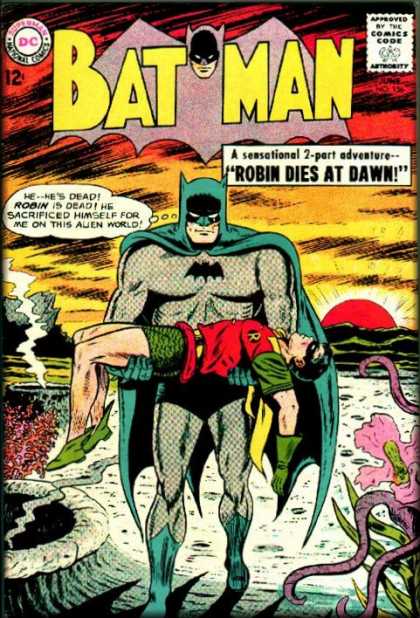
3. Batman 156: Robin Dies At Dawn
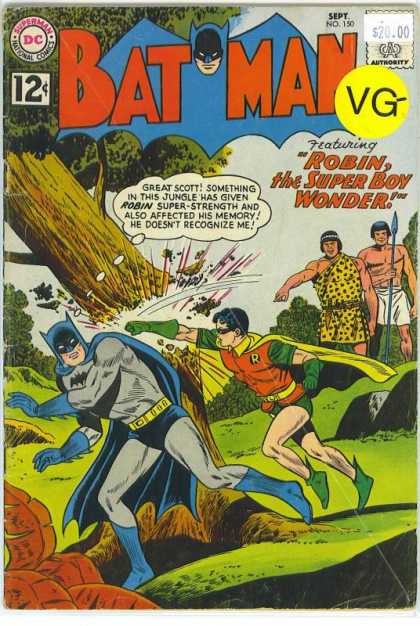
June 1963. Again more of an impact than a "true first", especially in light of recognizing the cover, but not recalling the story, of this slightly earlier issue.
But Batman 156 contains a pivotal story in many ways. Surreal extraterrestrial landscapes, raw emotion bordering on pathos, the great Pieta cover, and an ending involving a man coming to terms with his own fears, albeit in a trite 1962 kinda way.
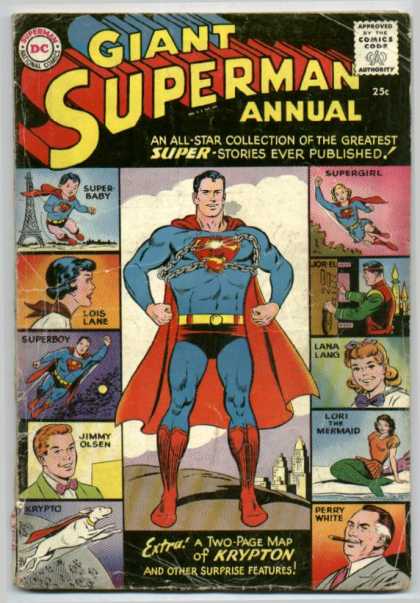
4. Superman Annual No. 2
The early work of Curt Swan, reprinted here, was another exceptional influence on my artistic development. To this day, I regard Swan's Superman as definitive. The cover that stands out more in my mind is one from several years later, that of Superman Annual No. 7.
The lower left story, the dream in which Superman becomes President (only natural born Americans can be President, remember?), bring to mind another Superman story that had a deep emotional resonance: Superman's Mission for President Kennedy. Begun before Kennedy's death, the story was published posthumously and featured an added splash page that still makes me choke up a bit.
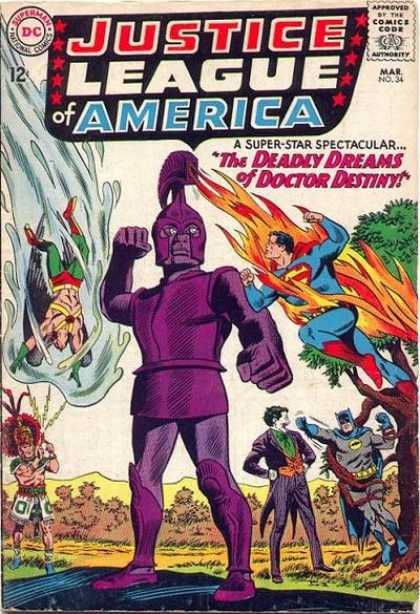
5. (tie) Justice League no. 34 and The Spirit No. 1
Since this issue of Justice League of America came out when I was 11, I already had a burgeoning comic collection by then.
My neighbor Patsy spent a dollar and bought me 8 new comics as a Christmas present. Money was incredibly tight in our household, and new comics were treasures, so opening the present and seeing this on top of the stack was a real treat.
Finally, this one.
There was this used furniture store in my old home town of Cohasset, Swelland's Used Furniture. The gent who ran the place (Mr. Swelland, of course) sold old comic books for a nickel each. Many of us built up our collections there.
One day he had this as a coverless book. Despite its not having a cover, I took a chance on it. I didn't see the cover above till just a few years ago, when I got a copy signed by Will Eisner (with issue no. 2, also signed!) dirt cheap on Ebay.
Somehow, I still have the coverless issue to this day.
This was my first exposure to the work of Will Eisner. I had no idea what it was, who he was, or how much he meant to my chosen art form, but I knew I wanted more. I would not see any more Eisner work till I encountered the Kitchen Sink undergrounds at the Madison Book Co-op during my first year of film school, circa 1975 or '76. If I can dig up my copy, I'll post a scan of the full wraparound cover later. For now, here's the front.
The Harvey Spirit was my first exposure to Gerhard Schnobble, a Capra-esque 8-pager about a nebbish who forgets he can fly.
It also contained the classic "Ten Minutes", the story of a kid named Freddie whose life is going nowhere and who snaps as a result of a pinball game. Here, Freddy is trying to hide the fact that he's just killed the owner of the corner drug store.
This story also contains a classic panel of little kids ogling the new comics, in which one of the kids utters the classic line, "wow! Look at the true horror romances!"
In addition to the populist perspective, burgeoning in comics at this time in Infantino's revitalized Batman (often completely at odds with the TV series) and the early Silver Age Marvels, this coverless book redefined the possibilities of comics for my hungry young mind.
If I ever fulfill one of my dreams and win an Eisner award for my scholarly work in comics, I'm going to mount the coverless Harvey Spirit No. 1 right next to it.
To paraphrase Vaughn Bode', like Diana thinks, she does.
While Emo Phillips' comment on repeating the fourth grade- I couldn't do it exactly- applies, here are the first five comics I remember reading.
1. Mr. Ed
While this is probably not the first comic I ever read, it's the earliest one I remember. I associate it with a trauma. One blistering cold winter's day, my older sister and I were waiting for the school bus. I was in either Kindergarten of first grade. A gust of wind tore the comic from my hands and sent it blowing across the snow-covered field next to the bus stop. Devastated, I desperately wanted to run after it, but my older sister, always practical, refused to let me.
Little did I know at the time that the artist, Russ Manning, would have a profound influence on my life and work. His clean lines and sleek anatomy in his Tarzan and Magnus, Robot Fighter comics, to say nothing of The Aliens, his thoughtful backup strip, gave me an idea of what drawing could really do.
2. Atlantis, the Lost Continent
Again, probably not one of the first, but it sticks in my mind. Since it was contemporary to the film, I must have read it in 1961, at the age of 6 or 7. The film upon which it's based is a lesser work of George Pal, best known for The Time Machine.
There was one panel in which Princess Antilla, frustrated with the cowardice of a suitor, proclaims, "Now he takes orders from a Warlord!" My younger sister and I were fascinated with this line, and turned it into a song.
3. Batman 156: Robin Dies At Dawn
June 1963. Again more of an impact than a "true first", especially in light of recognizing the cover, but not recalling the story, of this slightly earlier issue.
But Batman 156 contains a pivotal story in many ways. Surreal extraterrestrial landscapes, raw emotion bordering on pathos, the great Pieta cover, and an ending involving a man coming to terms with his own fears, albeit in a trite 1962 kinda way.
4. Superman Annual No. 2
The early work of Curt Swan, reprinted here, was another exceptional influence on my artistic development. To this day, I regard Swan's Superman as definitive. The cover that stands out more in my mind is one from several years later, that of Superman Annual No. 7.
The lower left story, the dream in which Superman becomes President (only natural born Americans can be President, remember?), bring to mind another Superman story that had a deep emotional resonance: Superman's Mission for President Kennedy. Begun before Kennedy's death, the story was published posthumously and featured an added splash page that still makes me choke up a bit.
5. (tie) Justice League no. 34 and The Spirit No. 1
Since this issue of Justice League of America came out when I was 11, I already had a burgeoning comic collection by then.
My neighbor Patsy spent a dollar and bought me 8 new comics as a Christmas present. Money was incredibly tight in our household, and new comics were treasures, so opening the present and seeing this on top of the stack was a real treat.
Finally, this one.
There was this used furniture store in my old home town of Cohasset, Swelland's Used Furniture. The gent who ran the place (Mr. Swelland, of course) sold old comic books for a nickel each. Many of us built up our collections there.
One day he had this as a coverless book. Despite its not having a cover, I took a chance on it. I didn't see the cover above till just a few years ago, when I got a copy signed by Will Eisner (with issue no. 2, also signed!) dirt cheap on Ebay.
Somehow, I still have the coverless issue to this day.
This was my first exposure to the work of Will Eisner. I had no idea what it was, who he was, or how much he meant to my chosen art form, but I knew I wanted more. I would not see any more Eisner work till I encountered the Kitchen Sink undergrounds at the Madison Book Co-op during my first year of film school, circa 1975 or '76. If I can dig up my copy, I'll post a scan of the full wraparound cover later. For now, here's the front.
The Harvey Spirit was my first exposure to Gerhard Schnobble, a Capra-esque 8-pager about a nebbish who forgets he can fly.
It also contained the classic "Ten Minutes", the story of a kid named Freddie whose life is going nowhere and who snaps as a result of a pinball game. Here, Freddy is trying to hide the fact that he's just killed the owner of the corner drug store.
This story also contains a classic panel of little kids ogling the new comics, in which one of the kids utters the classic line, "wow! Look at the true horror romances!"
In addition to the populist perspective, burgeoning in comics at this time in Infantino's revitalized Batman (often completely at odds with the TV series) and the early Silver Age Marvels, this coverless book redefined the possibilities of comics for my hungry young mind.
If I ever fulfill one of my dreams and win an Eisner award for my scholarly work in comics, I'm going to mount the coverless Harvey Spirit No. 1 right next to it.
Subscribe to:
Comments (Atom)